Is a Van Conversion Loan a Good Idea? Financing Your Dream Rig
The Dream vs. The Spreadsheet: A Harsh Reality Check

Let's be brutally honest for a second. That perfect Instagram van with the fairy lights and the sliding door that opens to a mountain vista? It started life as a giant, empty metal box and a terrifyingly large number on a quote from a welder. The dream is free. The nuts, bolts, solar panels, and compost toilet are not. Before you even whisper the word "loan," you need a budget. And I mean a real, pessimistic, "add-20%-for-oh-crap" budget. It's the least sexy part of the whole adventure, but skipping it is how dreams turn into debt nightmares.
So, How *Do* You Pay for a Rolling Tiny House?
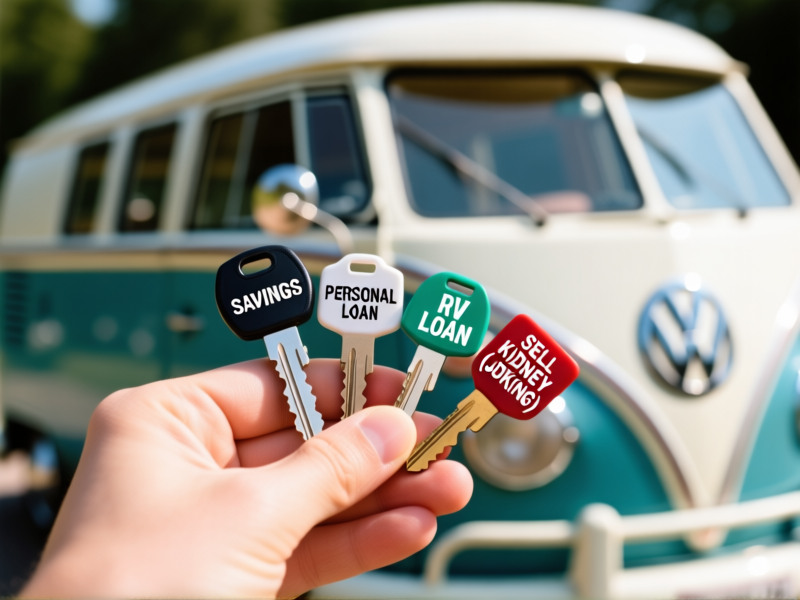
Unless you've got a stash of cash under the mattress, you're looking at financing. This is where the big question comes in. Do you get a traditional auto loan for just the van? A personal loan for the build-out? Or something called an RV loan? The answer isn't simple, because it depends entirely on your van's destiny. A bank sees a $10,000 used van very differently than it sees a $100,000 Mercedes Sprinter turned luxury studio. Your first job is to figure out what category your dream rig falls into on paper.
RV Loan vs. Personal Loan: The Cage Match
Here's the nitty-gritty. An **RV loan** is fantastic *if* your finished van qualifies. We're talking about a professionally built or professionally converted rig that's officially titled as a motorhome. The rates are usually lower, and terms can be longer (10-15 years), which makes payments smaller. But the bar is high. Your DIY masterpiece with a bed in the back might not make the cut.
Then there's the **personal loan**. This is the wild card. The bank doesn't care what you spend it on—van parts, a potato cannon, whatever. It's based on your credit and income. The upside? Flexibility. The downside? Higher interest rates and much shorter terms (3-7 years), which means bigger monthly payments. It's the "get-it-done" option, but it costs more.
The Sneaky Pitfall of a "Van-Only" Loan
Okay, scenario time. You get a great rate on a loan for the van itself. You drive it home, proud owner. Then you open the catalogs for flooring, batteries, and a diesel heater. Sticker shock doesn't even cover it. This is the trap. You're now payment-heavy on the van and cash-poor for the conversion. You're stuck with a shiny empty box you can't use. If you go this route, you *must* have the build funds separate and ready to rock. No wishful thinking allowed.
Your Credit Score: The Unseen Co-Pilot
Let's talk about your digital shadow: your credit. It dictates everything. That magical low RV loan rate? That's for people with sparkling credit. A personal loan for someone with a 650 score will have a brutally high APR. The math gets ugly fast. A few percentage points on a $50,000 loan can mean thousands wasted on interest—money that could have bought you an epic solar setup or a year of campsite fees. Before you fall in love with a van, know your number. It's the single biggest factor in whether financing is a "good idea" or a "please-stop-calling-me" idea.
The Bottom Line: Is It a Good Idea?
It can be. But only with a plan sharper than a new drill bit. A loan is a tool, not a magic wand. It makes sense if: 1) You have a rock-solid, researched budget, 2) You've shopped rates and know the *true* total cost of the loan, and 3) The monthly payment fits comfortably in your life *even* when gas is $5 a gallon and you need new tires. It's a terrible idea if you're using it to fund a vague Pinterest fantasy. Debt on a depreciating asset you can't afford to finish is an anchor, not freedom. Build the spreadsheet first. Then, maybe, visit the bank.